Cesta
0
$0,00
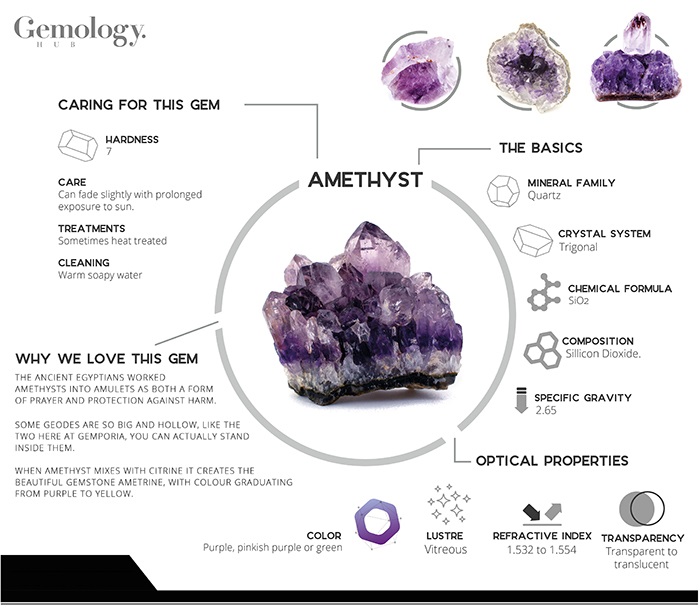
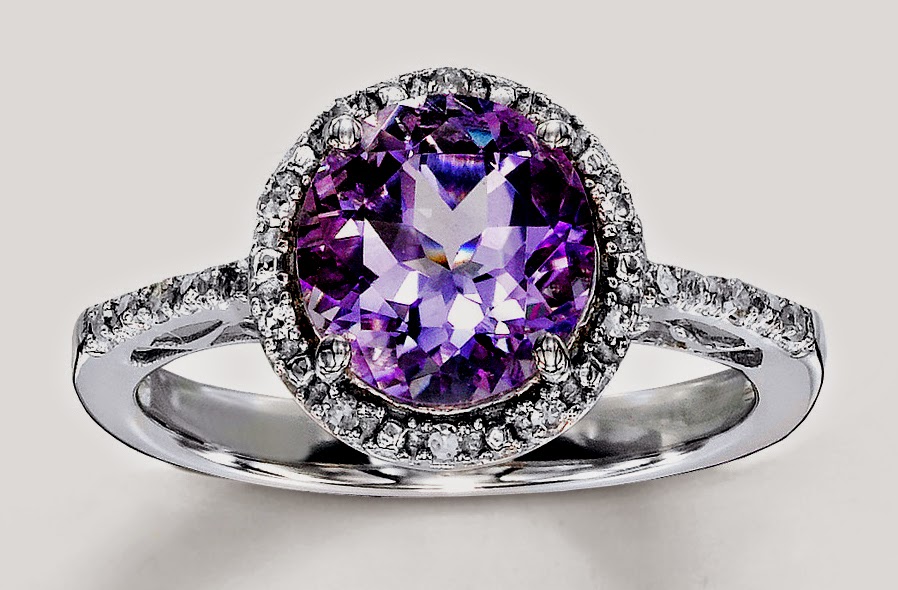
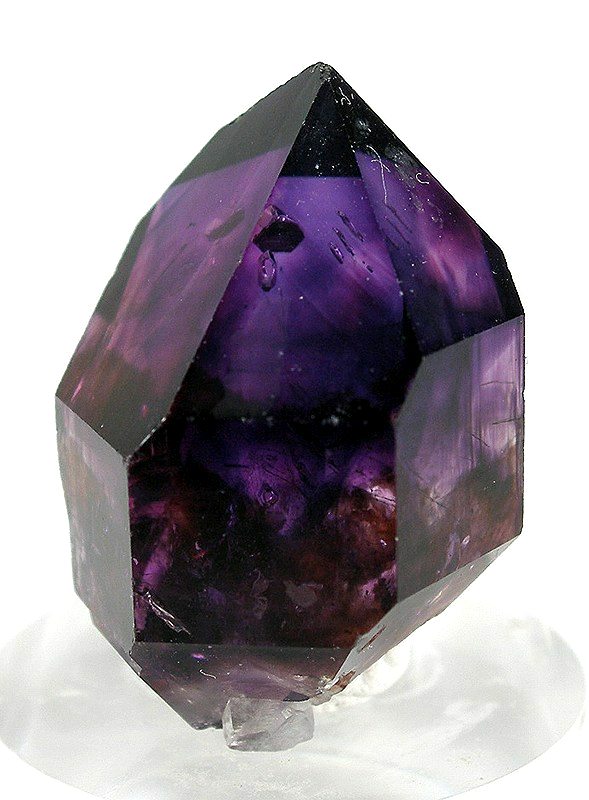
Many of the cultures of the world demonstrate the charm of amethyst throughout history. Today Amethyst is considered a semiprecious stone, but in ancient times it was considered a rare gemstone. Many of the jewels worn by the rulers in all of history count amethysts of a dark purple color. For centuries, genuine amethysts were valued equally with diamonds. This changed with the discovery of large deposits of amethyst in South America and elsewhere, making the gemstone more abundant and less expensive. Amethyst is still considered as the most precious variety of quartz.
In Exodus 28: 15-20 of the Bible, the amethyst is known as one of the 12 precious stones used by Aaron the high priest in the breastplate of judgment. Amethyst is often referred to as the Bishop's Stone, because of its use in rings used by Catholic bishops. For centuries, the amethyst has been used as a symbol of piety, humility, sincerity and spiritual wisdom. The real purple color of the amethyst also symbolizes Jesus Christ.
In ancient Greece, amethyst is used to prevent the effects of drunkenness. The word amethyst is derived from the Greek word amethustos, which means not drunk. According to Greek mythology, Dionysus, the Greek god of intoxication became angry and swore to take revenge on the next mortal he was. A beautiful maiden named Amethyst found Dionysus while on his way to pay homage to the goddess Diana. He unleashed his anger against her, but the goddess Diana turned Amethyst into a quartz statute to protect her. In view of the beautiful statue, it is said that Dionysus wept tears of wine, staining the quartz purple.
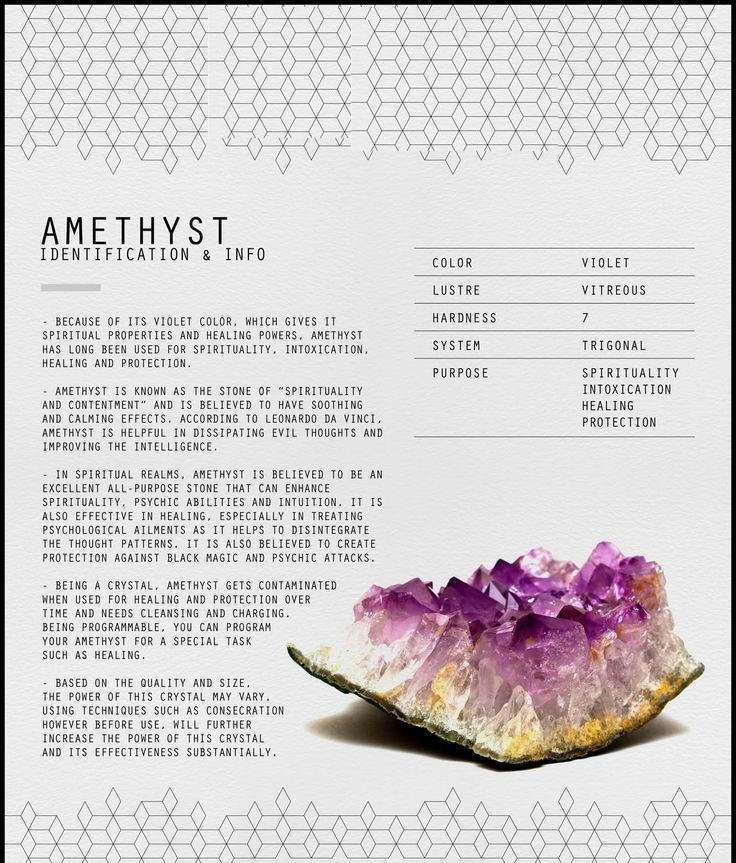
For centuries, amethyst has been an important stone in the Chinese philosophy of Feng Shui. Feng Shui treatments often involve wearing amethyst necklaces or bracelets as a means of deflecting negativity. Amethyst is believed to protect the bearer from evil and achieve emotional balance, while improving the processes of intelligence, memory and thinking. It is also thought to improve intuitive abilities and spiritual realization. Amethyst is also used by Feng Shui practitioners in times of stress to calm and calm the mind.
During the Renaissance, humility symbolized amethyst and modesty. Throughout this period of time, powerful and wealthy monarchs wore amethyst as a symbol of royalty. For this reason, amethyst is one of the many stones that appear in the British Crown Jewels. Queen Catherine the Great of Russia wore amethyst jewelry. It is rumored that it has been one of his favorite gemstones. In Renaissance magic, amethyst pendants engraved with the image of a bear were used as a protective amulet.
During the time of the Great Amethyst Pyramids it occupied an important place in the Egyptian culture. Egyptian pharaohs and rulers often wore amethyst jewelry. It was very common for pharaohs to adorn their tombs with amethyst. Many mummies have been discovered adorned with amethyst jewelry. Egyptian soldiers used amethyst in battle in order to maintain their value.